Blog

  • Bernard Arnault’s Luxury Empire: How Did One Family Gain So Much Influence Over the Global Fashion Industry?

    Bernard Arnault’s Luxury Empire: How Did One Family Gain So Much Influence Over the Global Fashion Industry?

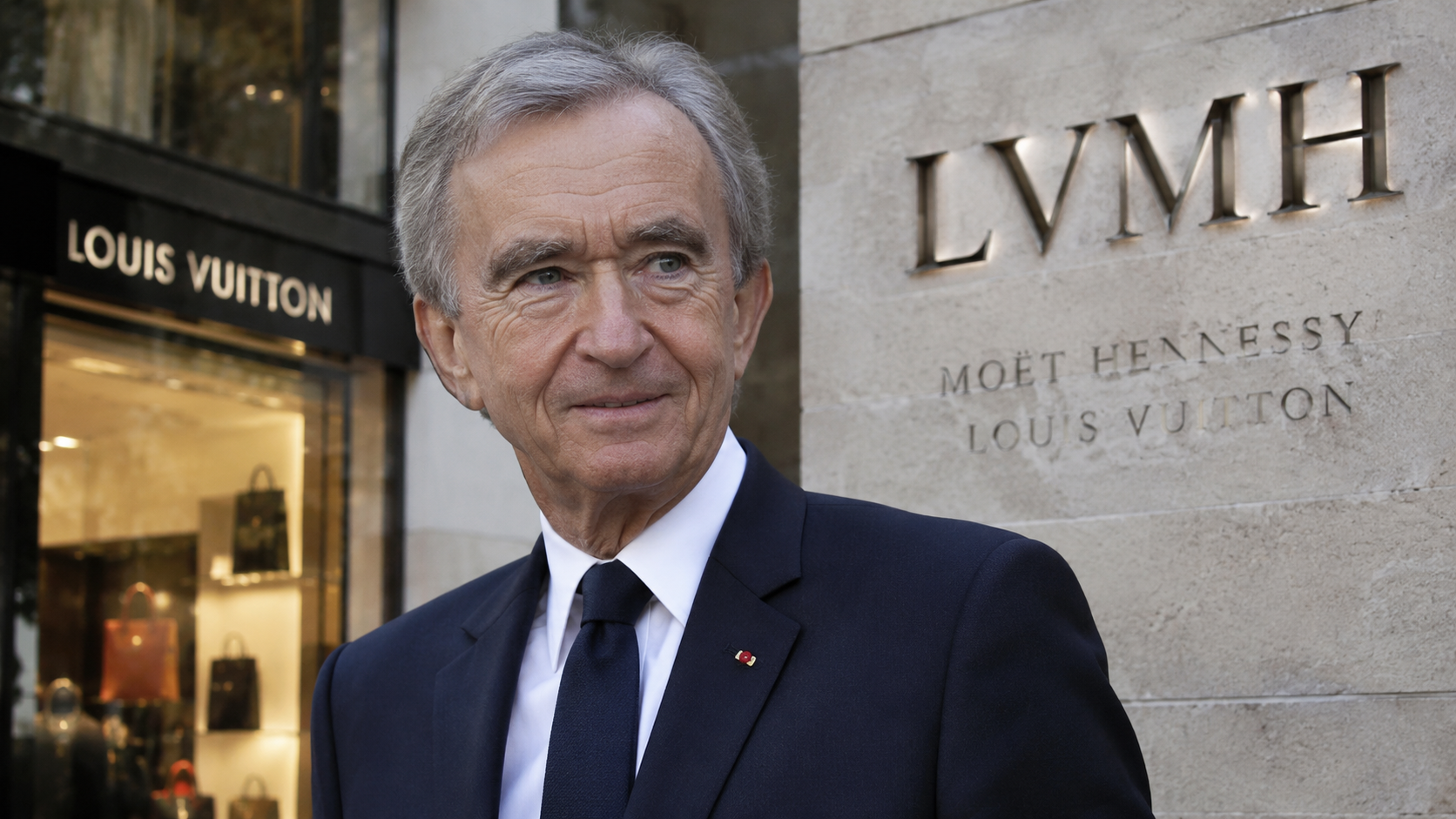
    When someone buys a Louis Vuitton handbag, a Dior jacket or a Tiffany necklace, the money goes to different brands, but all three belong to the same corporate group: LVMH. Behind that group is Bernard Arnault and his family, who have built one of the most influential businesses in the global luxury market. The interesting part is not simply how many famous labels they own. It is how one family gained the ability to influence so many different corners of luxury fashion without making those brands look like copies of one another.

    The strategy was to own prestigious brands, not create one giant fashion label

    Bernard Arnault’s approach was different from building a single fashion company and expanding its product range. Instead, he pursued established luxury houses with their own histories, loyal customers and distinctive identities. His acquisition of Christian Dior in 1984 was an early turning point. In 1987, he became involved in the creation of LVMH through the merger of Louis Vuitton and Moët Hennessy, and later secured control of the group.

    This strategy gave him something that is difficult for a new luxury business to manufacture: heritage. A customer buying Dior is not necessarily looking for the same experience as someone buying Louis Vuitton. One brand has its own design history, stores, creative leadership and reputation. By owning both, LVMH can reach different customers while keeping their identities separate.

    The real advantage is control over the business behind the brand

    LVMH’s structure gives the family influence beyond what a collection of individual fashion labels would normally provide. At the end of 2024, the Arnault family group owned 49% of LVMH’s share capital but held 64.81% of its voting rights. In practical terms, this means the family had a greater say in major corporate decisions than its percentage of ownership alone might suggest.

    This is an important distinction. A person can buy a Louis Vuitton bag without knowing who controls its parent company, but the ownership structure determines who has significant influence over the group that owns the brand. The Arnault family does not need to personally manage every fashion house to retain strategic control over the wider business.

    How the group gives individual brands a bigger platform

    LVMH’s portfolio includes more than 75 brands, known within the group as Maisons. Its operations span 81 countries, with over 6,280 stores and more than 211,000 employees reported at the end of 2025. This scale gives the group substantial reach across markets, retail locations and customer segments.

    The advantage is that an established brand can draw on the resources and international experience of a much larger organization while retaining its own creative identity. A smaller independent fashion house may struggle to finance international expansion, secure prime retail locations or build a global distribution network. Inside LVMH, those challenges can be addressed with the backing of a major group. The brand still needs desirable products, however. A large corporate parent cannot make customers want a collection simply by opening more stores.

    The numbers reveal that even a luxury empire has limits

    LVMH’s financial results show why this model is powerful, but not invincible. In 2025, the group generated €80.8 billion in revenue, down 5% from €84.7 billion in 2024. Its Fashion and Leather Goods division recorded €37.77 billion in revenue, an 8% decline from the previous year.

    These figures matter because luxury brands depend heavily on customer willingness to pay premium prices. When wealthy consumers become cautious, international demand weakens or a brand loses its appeal, even a large group feels the pressure. Owning several prestigious labels can spread exposure across different products and markets, but it cannot eliminate changes in consumer behaviour.

    The family question is bigger than Bernard Arnault

    The structure also raises a long-term question: who will exercise control when Bernard Arnault eventually steps away? All five of his children have held senior roles in the group, and Reuters reported in 2025 that shareholders approved extending the maximum age for the chairman and CEO position to 85. Investors have also sought greater clarity about succession arrangements.

    This matters because the empire is not simply a collection of valuable labels. It is a tightly connected ownership and management structure built around one family’s influence. The next generation will need to preserve the balance between financial discipline, creative independence and the heritage that makes these brands valuable.

    Bernard Arnault’s achievement was not merely buying famous fashion houses. It was building a system in which separate luxury identities operate under one powerful corporate structure. The real test of that system will be whether it can continue to work just as effectively when its founder is no longer making the central decisions.
  • Saudi Arabia’s Vision 2030: Can the Kingdom Build an Economy Beyond Oil?

    Saudi Arabia’s Vision 2030: Can the Kingdom Build an Economy Beyond Oil?

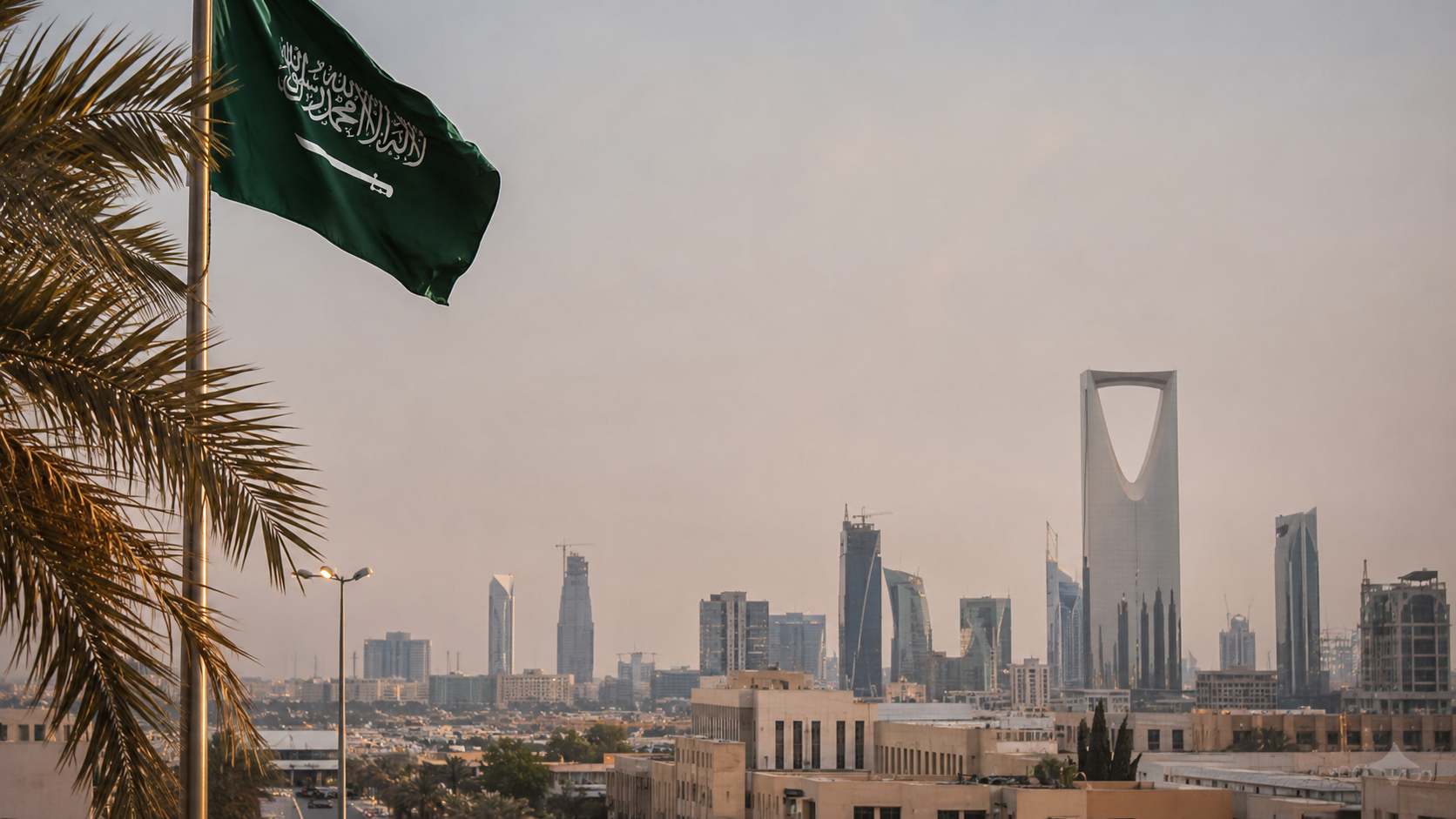
    Saudi Arabia is trying to achieve something that oil-rich countries have discussed for decades: build an economy that can keep growing even when oil prices fall. Under Crown Prince Mohammed bin Salman’s Vision 2030, the Kingdom is investing heavily in tourism, technology, manufacturing, entertainment and private businesses. But the real test is not how many new industries appear on paper. It is whether those industries can eventually earn enough, employ enough people and generate enough economic activity to stand without continuous support from oil-funded government spending.

    A bigger non-oil economy does not automatically mean independence from oil

    There has been measurable progress. Saudi Arabia’s 2025 Vision 2030 Annual Report says non-oil activities accounted for 55% of real GDP, compared with 45% in 2016. In 2024, official national accounts recorded 6% growth in non-oil activities while oil activities contracted by 4.4%. That is an important sign that the economy is no longer moving entirely in step with oil production.

    However, GDP share and financial independence are two different things. A hotel, construction company or technology business may be classified as non-oil, but it can still depend on government contracts, state-backed investment or spending made possible by oil revenue. The deeper question is whether these businesses can attract customers and investment on their own, rather than relying mainly on projects financed by the state.

    The real test is whether private businesses can stand on their own

    For diversification to last, Saudi Arabia needs more than impressive developments. It needs thousands of businesses that can compete, make profits, hire people and sell products beyond government-funded projects.

    Small and medium-sized enterprises are central to that effort. The 2025 Vision 2030 report counted more than 1.7 million SMEs, employing around 8.8 million people and contributing 22.9% of GDP. These figures show that the private business base is expanding. But the next question is how many of these companies can grow without depending on public procurement, subsidised finance or a major state-backed customer.

    That distinction matters to an ordinary business owner. A new restaurant near a tourist destination, for example, needs repeat customers throughout the year, not just visitors arriving for a major event. A local supplier needs reliable orders from several companies, not one large government-backed project. A business that cannot survive when a major contract ends is not yet evidence of a self-sustaining economy.

    The expensive problem with building new industries

    Saudi Arabia’s large development projects are intended to attract investment, create jobs and establish industries that did not previously exist at this scale. NEOM, the Red Sea developments and new tourism destinations are examples. But ambitious construction does not guarantee commercial success.

    In August 2025, Reuters reported that the Public Investment Fund had reduced the recorded value of its flagship giga-projects by more than 12%, from 241 billion riyals in 2023 to 211 billion riyals in 2024. Cost overruns, delays and changing market conditions were among the reasons. The adjustment showed that even a wealthy government-backed investor must reconsider projects when their costs and practical demands become difficult to manage.

    This is not necessarily a failure of diversification. Reassessing an expensive project can be better than continuing to spend simply to protect an announcement. But it does expose a basic weakness in the strategy: the Kingdom must prove that these developments can attract enough paying customers and private investment to justify their long-term costs.

    New jobs must become real career opportunities

    A diversified economy also needs workers with the skills required by its new industries. Tourism is a useful example. Building hotels and entertainment destinations is one part of the job; finding trained hotel managers, tour operators, chefs, technicians and experienced service staff is another.

    A 2025 study involving 129 Saudi women working in tourism, supported by in-depth interviews, identified difficulties including resistance to mixed-gender workplaces and male-dominated workplace cultures. This is a useful reminder that opening a new industry does not automatically remove social and professional barriers for the people expected to work in it.

    One earlier tourism study recorded a Saudi woman’s experience of preferring entrepreneurship over certain customer-facing jobs because of social expectations around those roles. That small but revealing example shows why workforce development involves more than training courses. Businesses also need working environments where people can realistically build careers and progress.

    Can the economy survive when oil revenue weakens?

    This is perhaps the most important question. Oil still plays a major role in Saudi Arabia’s external earnings. The IMF’s 2026 country assessment lists oil and oil products as accounting for 69% of the Kingdom’s exports. It also reported a non-oil primary balance deficit of 23.3% of non-oil GDP for 2025, indicating that non-oil economic activity is not yet generating enough fiscal resources to cover government spending without substantial support from oil-related income.

    That does not mean diversification is going backwards. It means the transition is incomplete. Tourism receipts, manufacturing exports, private investment and business taxes must eventually become stronger sources of economic strength. Otherwise, lower oil income could still force the government to reconsider spending, delay projects and reduce the support that helps new industries expand.

    The real measure of Vision 2030

    Saudi Arabia has made visible progress in expanding its non-oil economy, and the growth of SMEs suggests that new business activity is taking root. Yet the decisive achievement will not be a futuristic city, a record number of visitors or a larger non-oil GDP percentage.

    It will be the point at which a Saudi hotel, technology company, manufacturer or local supplier can grow because customers genuinely want what it offers, not simply because a government programme is funding its development. Vision 2030 will have achieved its deeper purpose when the private economy can keep creating jobs, attracting investment and generating revenue even during a prolonged period of weak oil prices.