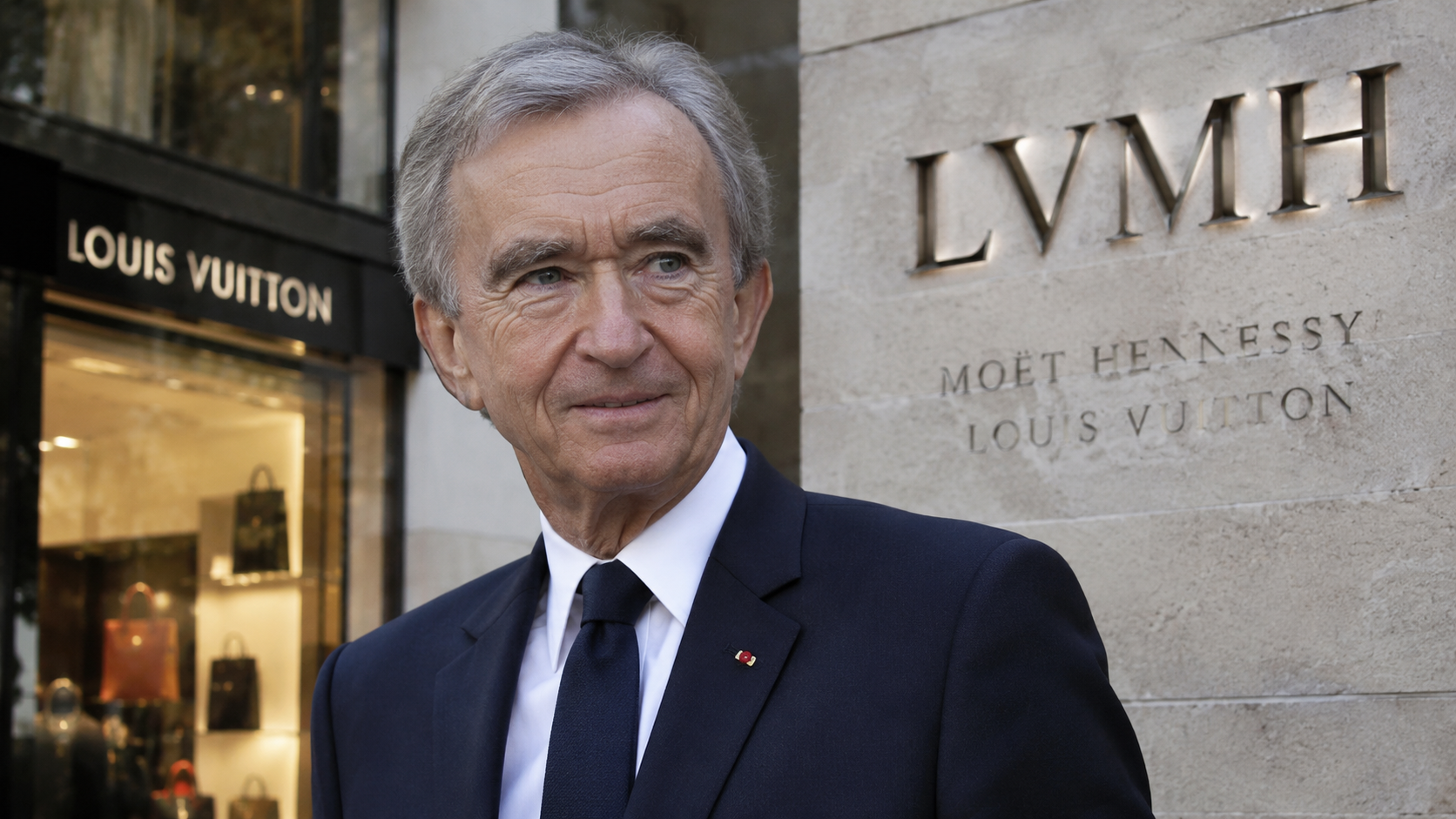
When someone buys a Louis Vuitton handbag, a Dior jacket or a Tiffany necklace, the money goes to different brands, but all three belong to the same corporate group: LVMH. Behind that group is Bernard Arnault and his family, who have built one of the most influential businesses in the global luxury market. The interesting part is not simply how many famous labels they own. It is how one family gained the ability to influence so many different corners of luxury fashion without making those brands look like copies of one another.
The strategy was to own prestigious brands, not create one giant fashion label
Bernard Arnault’s approach was different from building a single fashion company and expanding its product range. Instead, he pursued established luxury houses with their own histories, loyal customers and distinctive identities. His acquisition of Christian Dior in 1984 was an early turning point. In 1987, he became involved in the creation of LVMH through the merger of Louis Vuitton and Moët Hennessy, and later secured control of the group.
This strategy gave him something that is difficult for a new luxury business to manufacture: heritage. A customer buying Dior is not necessarily looking for the same experience as someone buying Louis Vuitton. One brand has its own design history, stores, creative leadership and reputation. By owning both, LVMH can reach different customers while keeping their identities separate.
The real advantage is control over the business behind the brand
LVMH’s structure gives the family influence beyond what a collection of individual fashion labels would normally provide. At the end of 2024, the Arnault family group owned 49% of LVMH’s share capital but held 64.81% of its voting rights. In practical terms, this means the family had a greater say in major corporate decisions than its percentage of ownership alone might suggest.
This is an important distinction. A person can buy a Louis Vuitton bag without knowing who controls its parent company, but the ownership structure determines who has significant influence over the group that owns the brand. The Arnault family does not need to personally manage every fashion house to retain strategic control over the wider business.
How the group gives individual brands a bigger platform
LVMH’s portfolio includes more than 75 brands, known within the group as Maisons. Its operations span 81 countries, with over 6,280 stores and more than 211,000 employees reported at the end of 2025. This scale gives the group substantial reach across markets, retail locations and customer segments.
The advantage is that an established brand can draw on the resources and international experience of a much larger organization while retaining its own creative identity. A smaller independent fashion house may struggle to finance international expansion, secure prime retail locations or build a global distribution network. Inside LVMH, those challenges can be addressed with the backing of a major group. The brand still needs desirable products, however. A large corporate parent cannot make customers want a collection simply by opening more stores.
The numbers reveal that even a luxury empire has limits
LVMH’s financial results show why this model is powerful, but not invincible. In 2025, the group generated €80.8 billion in revenue, down 5% from €84.7 billion in 2024. Its Fashion and Leather Goods division recorded €37.77 billion in revenue, an 8% decline from the previous year.
These figures matter because luxury brands depend heavily on customer willingness to pay premium prices. When wealthy consumers become cautious, international demand weakens or a brand loses its appeal, even a large group feels the pressure. Owning several prestigious labels can spread exposure across different products and markets, but it cannot eliminate changes in consumer behaviour.
The family question is bigger than Bernard Arnault
The structure also raises a long-term question: who will exercise control when Bernard Arnault eventually steps away? All five of his children have held senior roles in the group, and Reuters reported in 2025 that shareholders approved extending the maximum age for the chairman and CEO position to 85. Investors have also sought greater clarity about succession arrangements.
This matters because the empire is not simply a collection of valuable labels. It is a tightly connected ownership and management structure built around one family’s influence. The next generation will need to preserve the balance between financial discipline, creative independence and the heritage that makes these brands valuable.
Bernard Arnault’s achievement was not merely buying famous fashion houses. It was building a system in which separate luxury identities operate under one powerful corporate structure. The real test of that system will be whether it can continue to work just as effectively when its founder is no longer making the central decisions.